The permit that stays attached to the job it protects
Isolate, approve and time-box hazardous work on the tag, with the record held on the work order it gates
Keep permit conditions on the work order, not in a binder
A permit answers three questions before anyone touches safety-critical equipment: what is isolated, who authorized the work, and until when. Magnus Reactor keeps those answers on the work order itself. The permit names the tag, lists the isolation points, carries the technical authority's approval and holds a validity window, so the crew on deck and the planner onshore read the same conditions.
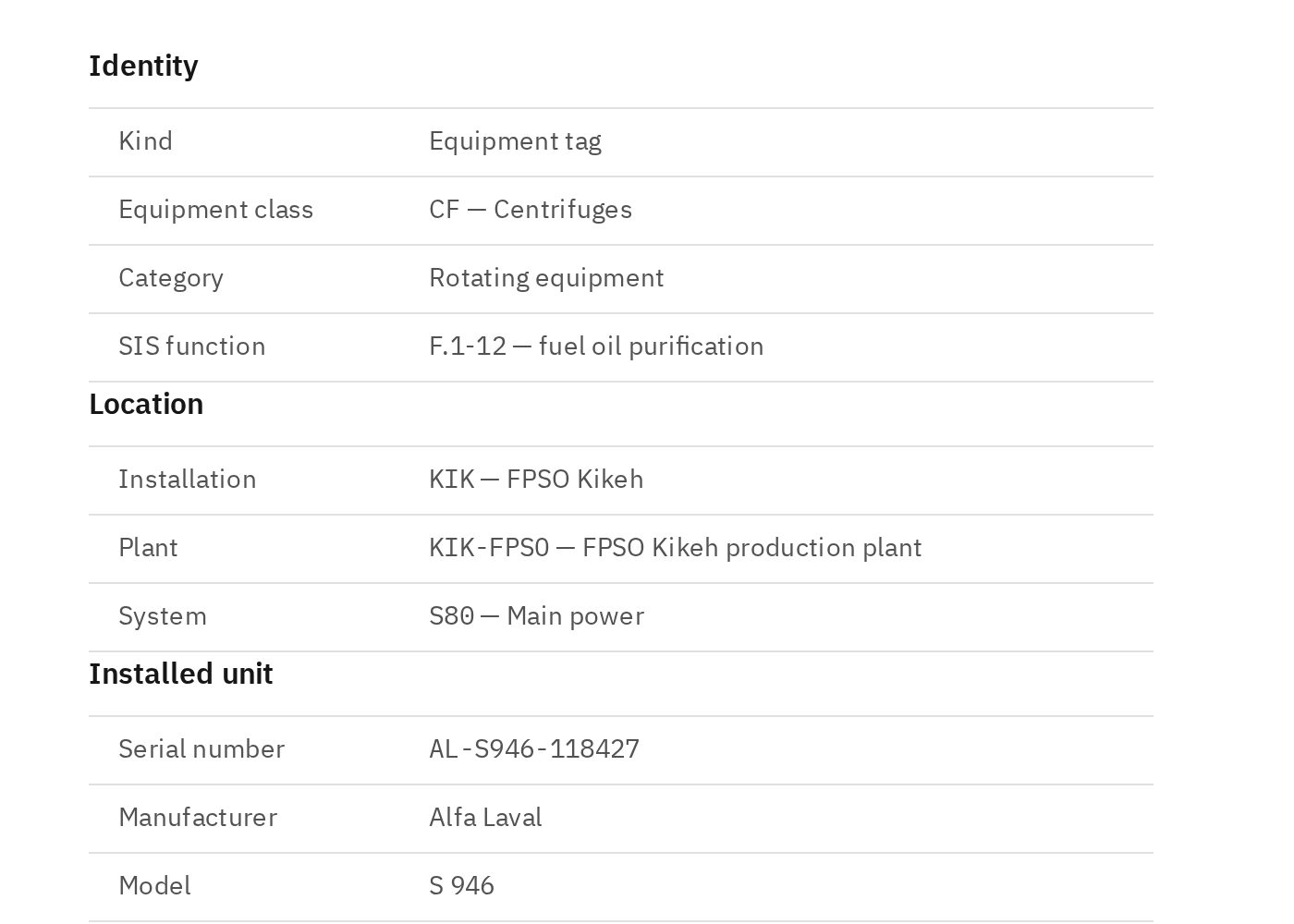
Because every tag in the register carries a safety-critical flag and its SIS function reference, the permit starts from what the equipment is rather than from a blank form. When the window lapses or a permit is suspended, the work order stops and the time waiting is recorded as a permit delay, kept apart from the active-hours figure that reliability analysis depends on.
Explore the capabilitiesBenefits
Start from the tag's safety classification
The safety-critical flag and SIS function on the functional location tell you which jobs need a permit before the request is raised. Filter the register for safety-critical tags and the scope of permitted work is already in view.
Gate the work order on approval
A permitted work order cannot leave approved until the technical authority signs the permit. The approval sits on the record as a lifecycle gate, so unauthorized work is stopped by the state machine, not by a reminder.
Time-box every permit
Each permit is valid from a start to an end. Outside that window the work order stops, whether the crew has finished or not, and an extension is a new decision by the same authority.
Record the wait as a permit delay
When work stands still for a permit, log it as a delay with permits as the reason. Downtime and active maintenance hours stay honest, and the completion gate that compares them has the explanation it needs.
Permit capabilities
Raise the permit from the work order, so it inherits the functional location, the installed unit and the job it covers. The tag record supplies the equipment class, the plant and system it sits in and its safety classification, so the requester describes the task in plain words and the system fills in where and what. One permit protects one work order, and the work order shows which permit it is waiting on.
See how work orders are structuredRecord the hazards the task exposes and the control that answers each one. The assessment lives on the permit, next to the tag it applies to, so the same pump in the same module carries the same known risks from one job to the next. Reviewers see the assessment before the isolation plan, and nothing moves to approval until every listed hazard has a control against it.
Enter the points to be isolated and locked: valves, breakers, drains, vents. Each point is confirmed by the person who applied it, and the permit does not become approvable until every point is confirmed. The list is written against the tag hierarchy, so a structure tag for a treatment module can carry the isolations for the equipment tags beneath it.
The technical authority reviews the hazards, controls and confirmed isolations, then approves. That approval is the lifecycle gate on the work order: without it the job stays at approved and goes no further. The approver, the time and any remark are stored on the record, and a work order on a safety-critical tag that has run overdue asks for the same authority before it proceeds.
See who approved on the recordA permit is valid for a window. When it expires, or is suspended because conditions on the plant changed, the work order stops and the interval is recorded as a permit delay. Closing the permit confirms that isolations are removed and the equipment is returned to service, which is the step that lets the work order move through work done to completed.
See the full permit flow
A permit from request to close
Every step is a state on the record, so the work order always shows where its permit stands.
Request
Raise the permit from the work order. It inherits the tag, its safety classification and the job it protects.
Work order at requested
Assess the risk
List the hazards the task exposes and the control for each. The assessment stays on the permit beside the tag.
Confirm isolations
Name each isolation point. The person who applied each isolation confirms it before the permit can go for approval.
Every point confirmed
Approve
The technical authority reviews hazards, controls and isolations and approves. The approver and time are recorded on the work order.
Technical authority approval
Valid for a window
The permit opens at its start time and the work order can move to scheduled and in progress. Work stays within the stated window.
Suspend or expire
If conditions change or the window closes, the permit stops and so does the work order. The wait is logged as a permit delay.
Work order stops
Close
Isolations are removed and the equipment returned to service. The closed permit lets the work order move from work done to completed.
Part of one record
The permit is one record among several that describe the same tag, and each join is a field you can follow.
Work Orders
Gate the job the permit protects
A permit belongs to one work order in Work Orders. The technical authority's approval is the gate that moves that work order past approved, and the work order shows which permit it is waiting on.
Asset Management
Read the tag's safety classification
The permit reads the safety-critical flag and the SIS function reference from the functional location in Asset Management. Filter for safety-critical tags and you have the list of equipment whose work needs a permit.
Collaboration
Name who approved, on the record
The approver is a member of your organization with a role that allows it, managed in Collaboration. Their name, the time and their remark are stored on the permit and in the work order's status history.
Questions we are asked
No. The technical authority's approval is a lifecycle gate on the work order. A job on a safety-critical tag stays at approved until that approval is recorded, so it never reaches scheduling or execution without it, and the status history shows exactly when the gate was passed.
Record the wait as a work order delay with permits as the reason. The hours are not added to active maintenance time, so the reliability figures computed from the record are not inflated, and when downtime is much larger than active time the completion gate finds the delay reason already there.
Critical describes failure impact on production. Safety critical means the tag performs a safety-instrumented function, following the distinction in ISO/TR 12489. Each tag carries a safety-critical flag and an SIS function reference, and it is the safety-critical flag that decides whether work needs a permit.
The technical authority for the plant. Approvers are members of your organization with the role that allows it; the approval, the time and any remark are recorded on the permit and in the work order's status history, so the sign-off can be traced later.
No. Closing the permit confirms the isolations are removed and the equipment is back in service. The work order then goes through its own completion gates: actual times, active and downtime hours, and technical completion.